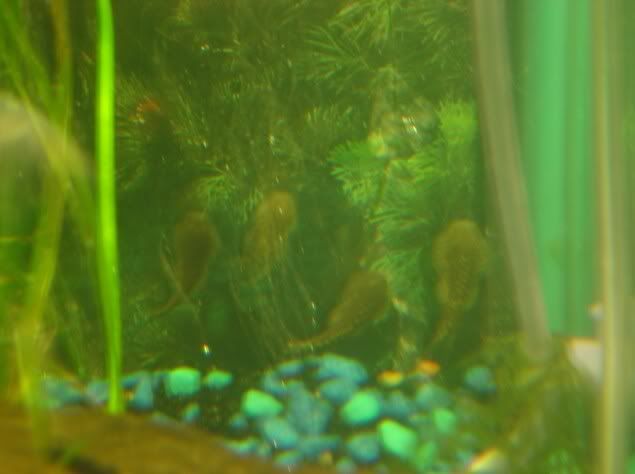
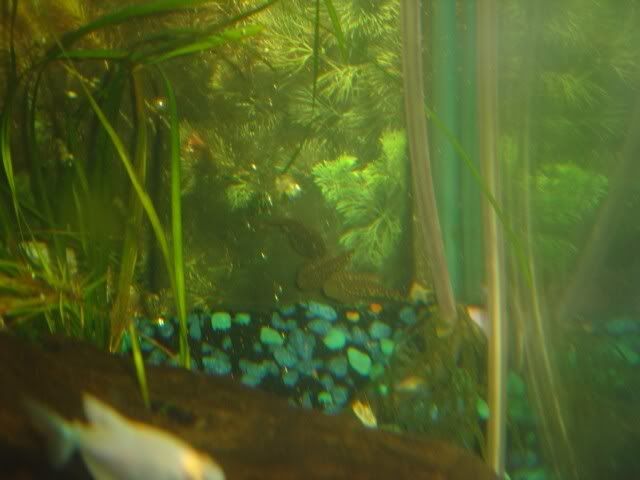
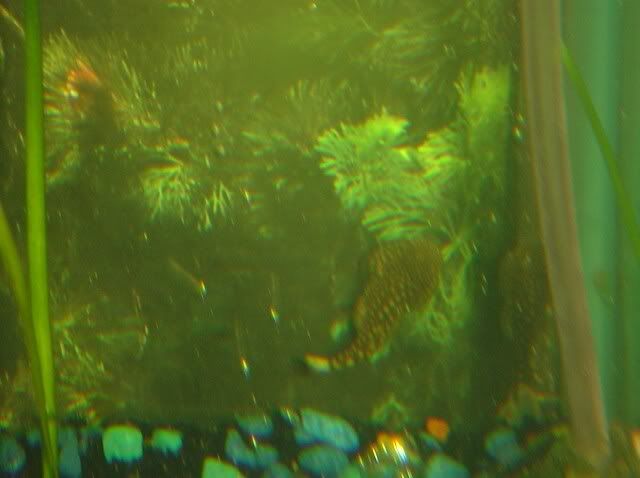
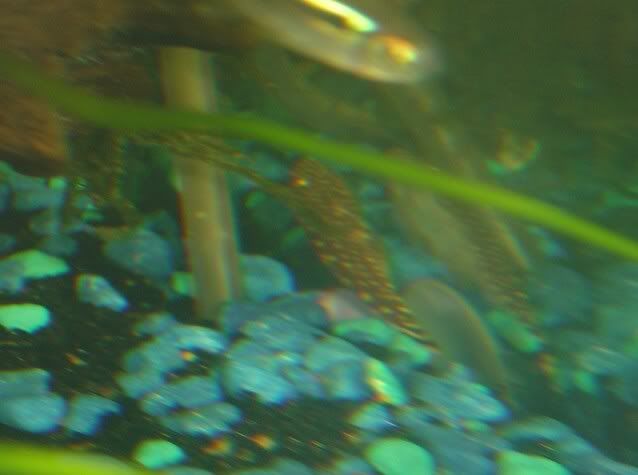
Wow! I've been out and everyone went nuts on this!
Some thanks are in order.
Firstly, let me say an official "Hi!" to Wendy (Sthrn75) and thanks for posting your stuff here. It's very refreshing to have somebody new come to LOL and provide such comprehensive information. This is so helpful to us all in making determinations or recommendations.
Thanks also to everyone else for reacting just as I knew you would, which is why I asked Wendy to post her info here. She sent me an E-mail reply to my earlier questions and some of that she's included already. I'll paste over other stuff which will answer Q's that others have asked.
There's a general vibe here that confirms my personal suspicion that these are Corydoras eggs. I really, really want to be wrong, but the following makes me fairly confident in that.
Sthrn75 wrote:
The temperature I have actually been having trouble with, as I put in a new heater a few months ago. It was set at 25celcius yet the water temperature was held at 28-29Celcius. Way too high especially for the Hillstream Loaches I know. But it was not affecting them at all, they were still rummaging all over the tank. A few days ago, when the temperature actually climbed over 29Celcius, I decided that was it I really had to do something about it. And I turned the heater off at the power board. It is winter here now and our overnight temperature has already dropped to as low as 3Celcius, although I do have my reverse cycle air conditioner on heat setting at night time to keep the house warmish.
Anyway, the water temperature in the tank dropped to about 22C over the next 36 hours or so, and seeing as how it was night time again, I turned the heater back on to raise the temperature abit. I turned the heater off once the temp had gotten to 25C. It had dropped to 24C about 24 hours later. Which is when I pulled the heater out of the tank & reset the heater temperature to 21C and put it back into the aquarium. It has been holding the temperature at a steady 25C for the last 28 hours.
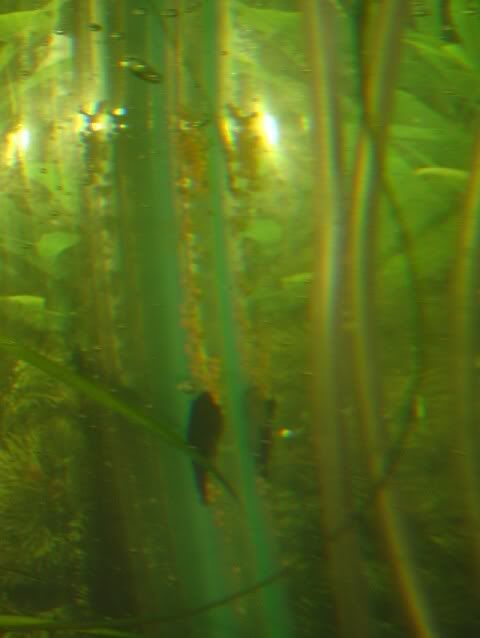
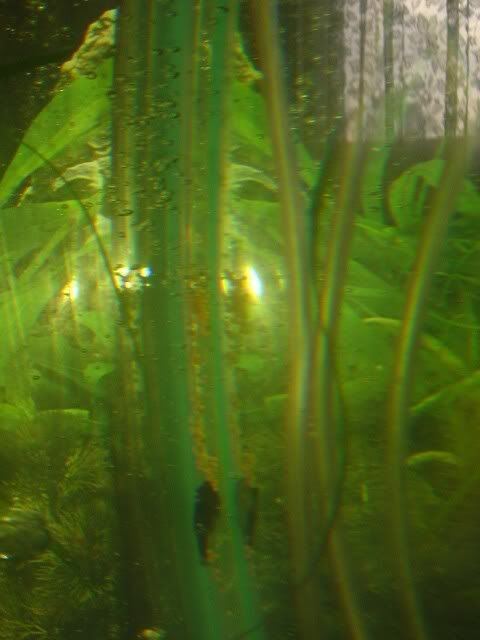
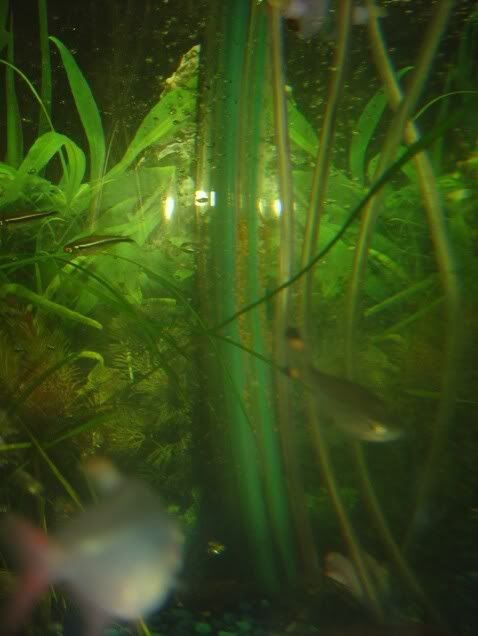
It was after altering the heater & replacing it that I saw the eggs.
Now this would be absolutely typical changes that might trigger Corydoras to spawn. Laying them on the glass is very typical although as others have stated the eggs
appear to be yellower than one might expect from Corys. However, there is a general yellow tone to the photographs in general.
In answer to my question: Where are the eggs?
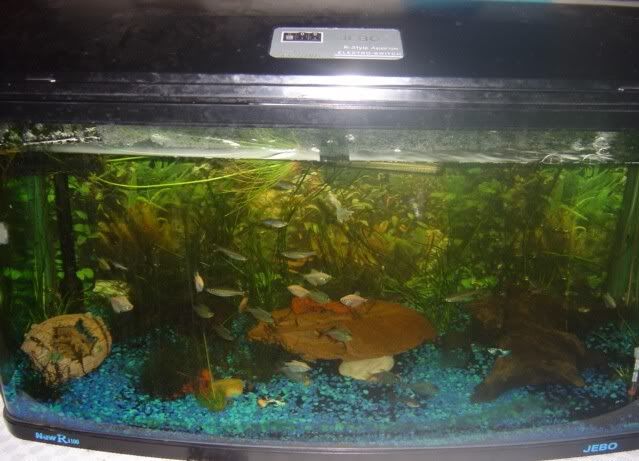
Stuck to the side of the aquarium, under the inflow of the water from the filter
Wendy, I think the reason that the Gastros are hanging out near the eggs is because it's the area of highest current in your tank,
not because of the eggs. As you've seen in my articles your tank could not be termed ideal for them.
Water parameters are:
Haven't changed in a long time. The tank has been set up for about 4 months now. Ammonia:0, Nitrite: 0, Nitrate:20ppm, Kh:2. I don't know why but my GH test wasn't working, but all previous tests it has been Gh:8.
Wendy sent me a video link:
www.youtube.com/watch?v=4c0KdXPzqHo
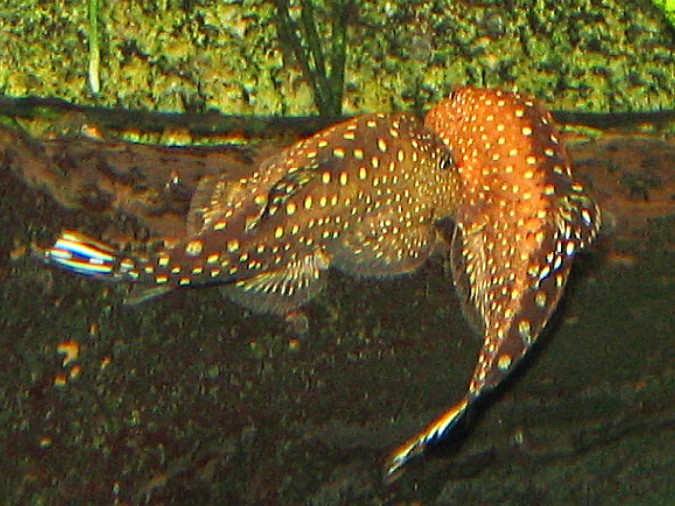
This clearly shows two fish engaged in a territorial battle. I'm not 100% certain, but I think they are
Gastromyzon scitulus males. They show typical "warpaint" marking when these guys
really get into it.
Sthrn75 wrote:
Believe the Red Blue Columbian Tetra's are a real threat of the baby fry, maybe the paradise fish (although he is very very quiet and hides most of the time as I think the other fish are just to boistrous for him), the scissortails, and the coloured widow tetra's.
I doubt that the Corys will harm the eggs, nor (probably) the Gastros. Everything else are possibly of risk to the eggs, but the greatest danger to small fry will come from the Danios and the Rasboras. These are suprisingly effective hunters. The tetras pose more risk to free-swimming fry than bottom-living ones IMO. Paradise are opportunistic hunters. They will stalk around and anything that moves will get their attention.
So
anything that hatches is at risk in this tank. Teeny Corys might have more chance due to armour, but only by a bit until they get larger.
So basically, you'll have to sit back and see what happens. Moving them is not really an option and will likely result in casing damage to the eggs due to being adhesive.
We don't know enough about Hillstream Loach reproduction, but knowledge of
Pseudogastromyzon,
Liniparhomaloptera and
Sewellia would tend to suggest that adhesiveness is not a property of Balitorid eggs. However, I would not discount it because it seems quite a logical property to have given the natural habitat.
So let's see what happens. In the interim, as you've seen we have a freshwater forum which can help with Q's regarding your other fish and the Off-Topic Forum which is for
anything else, carries a large 'Government Health Warning', but given the missing part of your E-mail address name I somehow think you may have what it takes to survive there

Martin.


 I see you're awake again
  Early evening here in Canada.