Page 3 of 4
Posted: Mon Oct 01, 2007 7:24 pm
by Blue
I'm really jealous.

Posted: Mon Oct 01, 2007 7:41 pm
by tariesindanrie
Frank's Aquarium just got these in- you can get them online- I hear they do a nice job with shipping and whatnot.
Kate
Posted: Wed Oct 03, 2007 11:13 am
by The.Dark.One
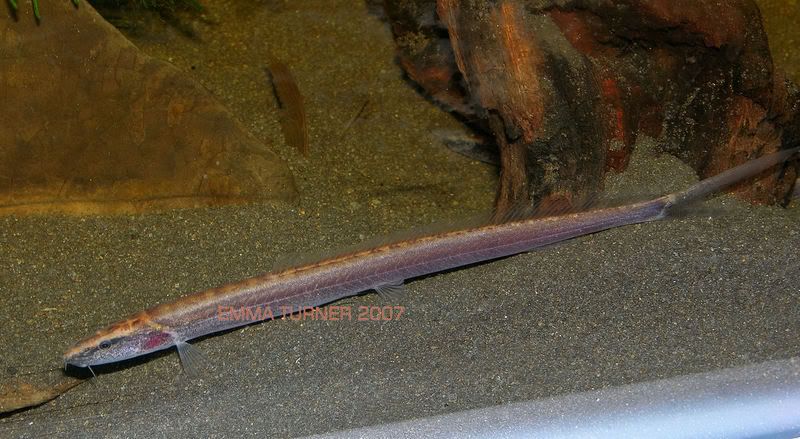
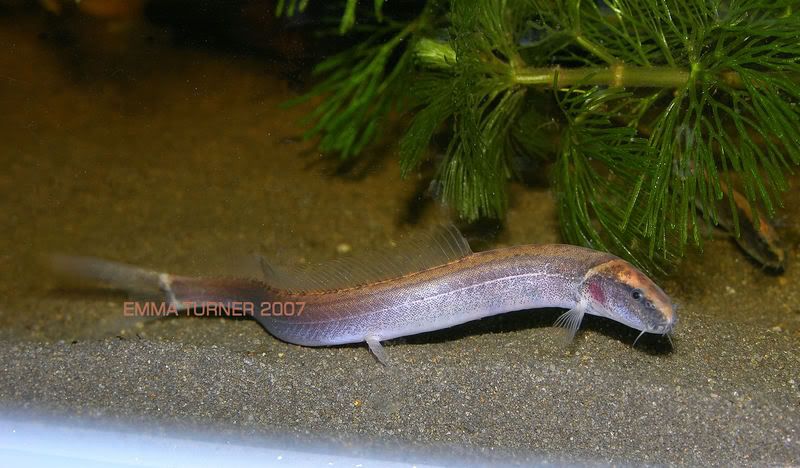
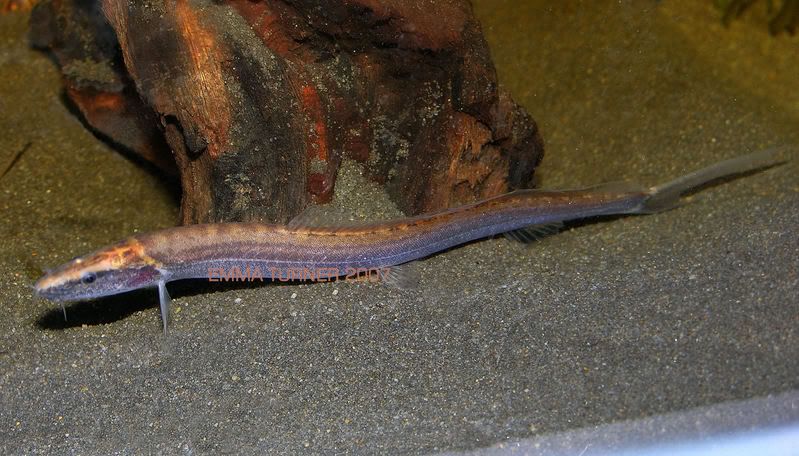
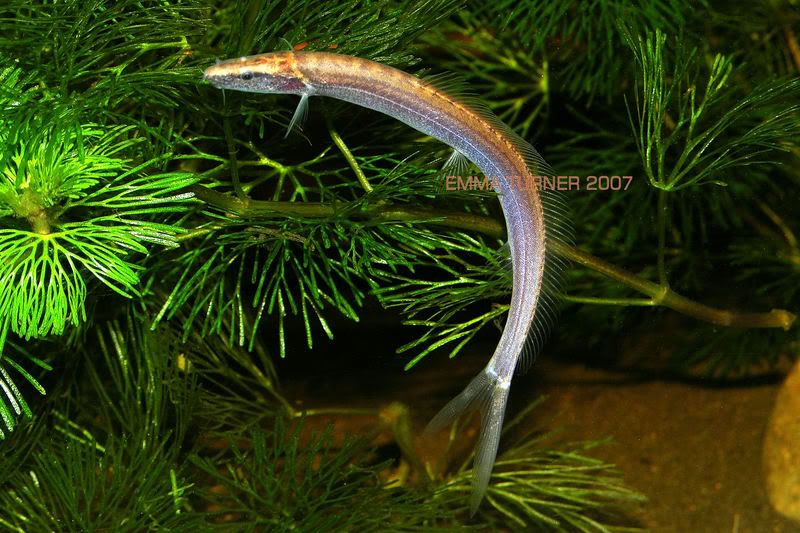
Emma Turner wrote:I managed to get a few more pics of the other Vaillantella species yesterday:
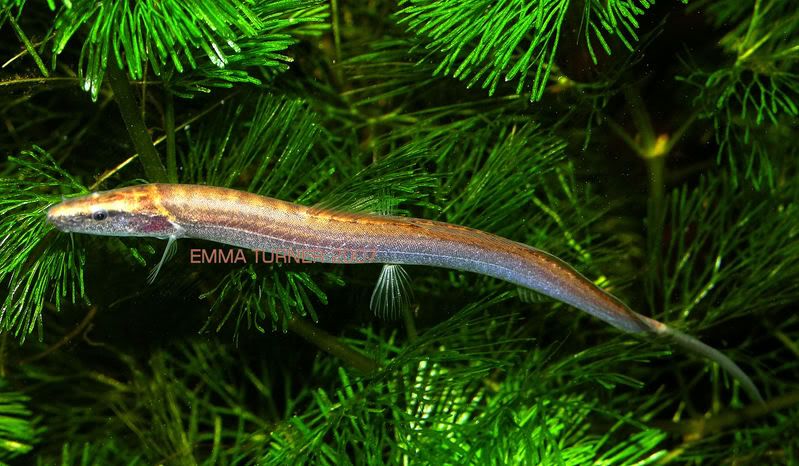
Before I start work on the new species profile, are we all 100% sure that these are definitely V. cinnamomea and not V. euepiptera, given that all known Vaillantella species are found in Borneo? I've read and re-read Dr Kottelat's descriptions and am wondering if we need close ups of the caudal fin and maybe better shots of the anal fin? There seem to be a lot of areas that correspond to his description of V. euepiptera.... I probably just haven't had enough sleep!
Emma
I will have another look when i get back from sunny spain. I´m in the internet booth at the moment after having had a few too many pints. A different fish is on the menu every day in the hotel!

Posted: Thu Oct 04, 2007 6:29 pm
by Emma Turner
Now that's a true loachaholic, folks. Away on his hols and still finds time to get on the internet and visit LOL!

Posted: Sun Oct 07, 2007 6:39 am
by The.Dark.One
Just got back to bedlam and the English weather!
According to the original description of euepiptera that fish has only 7 anal fin rays but Kottelat gives a count of 8 1/2 or 9 1/2 (read 9 or 10), which overlaps with euepiptera.
All of the other meristical differences also appear to overlap, apart from perhaps caudal vertebrae which is difficult to count on live fish. That just leaves us with colour/pattern, and locality, and morphometrics. The patterns are similar between the two species. Locality may not be useful here. In morphometrics your specimens have the right proportional head length in SL and predorsal length in SL to be cinnamomea not euepiptera.
I cant be 100% because of the pattern problem, but based on what I can see I would lean more towards cinnamomea, albeit with some reservations now (well spotted Emma).
Cheers
Posted: Sun Oct 07, 2007 7:13 am
by Graeme Robson
I would still go ahead with a
Vaillantella cinnamomea profile. I've always known or believed that the
Vaillantella euepiptera has a more distinct
zig-zag pattern running from it's head to the lower part of the body.
PDF for
Vaillantella euepiptera here>>
http://rmbr.nus.edu.sg/rbz/biblio/41/41rbz113-118.pdf
Posted: Sun Oct 07, 2007 7:47 am
by The.Dark.One
Graeme Robson wrote:I would still go ahead with a Vaillantella cinnamomea profile. I've always known or believed that the Vaillantella euepiptera has a more distinct zig-zag pattern running from it's head to the lower part of the body.
Hi Graeme
Do you mean the pattern along the ridge of the back (figure 5 in the attachment you linked), or the pattern in the body? If you mean the one along the ridge of the back, the pattern in Figure 5a is present in some of Emma's specimens (see the penultimate image on her post of 24/9/07 at 10.02pm). However, I agree and think that for the time being we should class these as cinnamomea.
Posted: Sun Oct 07, 2007 8:24 am
by Graeme Robson
Hi Steve. Yes, the pattern along the ridge of the back. I don't know why but for me the lack of a pattern around the head makes me believe that these are
Vaillantella cinnamomea. I can only see the markings under the long dorsal fin. The zig-zag markings are known to be strong from the head down-wards on the
Vaillantella euepiptera. I'll agree with you on agreement with this one, Ooo shaded one.

Posted: Mon Oct 08, 2007 10:13 am
by Emma Turner

I'm still not sure, but will go ahead and put together a profile for
V. cinnamomea over the next few days.
In the meantime, I'll try and get a look at some of the larger specimens to see if there is any evidence of zig zag markings.
Emma
Posted: Sat Oct 13, 2007 6:49 pm
by Emma Turner
Posted: Sat Oct 13, 2007 7:03 pm
by Graeme Robson
Superb looking large or adult
Vaillantella cinnamomea there Emma.

The
Vaillantella euepiptera looks like the
Vaillantella maassi in body colour and holds the bright Orange/Red colouration in a
jazzy spot/dash form along the head regions downloads.
Posted: Sat Oct 13, 2007 7:28 pm
by Emma Turner
Thank you.
But......to put my mind at rest, does anyone have access to a photograph of a live
V. euepiptera specimen? I
still have a few doubts as to whether these really are
V. cinnamomea because of the species comparison descriptions in Dr Kottelat's
V. cinnamomea paper.

When looking at these in the tank alongside the
V. maassi, the general body colouration looks the same and some specimens have what I would call jazzy
ish markings along the dorsal surface.
Emma
Posted: Sat Oct 13, 2007 7:39 pm
by Graeme Robson
The V. euepiptera has the same dark face as the V. massii but with defined markings from what i explained.
BTW: Is that your personal sand i see?
Posted: Sat Oct 13, 2007 7:50 pm
by Emma Turner
It is indeed. It's the old river tank, now a
Vaillantella tank. Heheheh!

Posted: Sat Oct 13, 2007 7:52 pm
by Graeme Robson
WoOt!!

Now you'll know how hard these buggers are to feed......