Page 5 of 7
Posted: Mon Sep 03, 2007 8:42 pm
by Mark in Vancouver
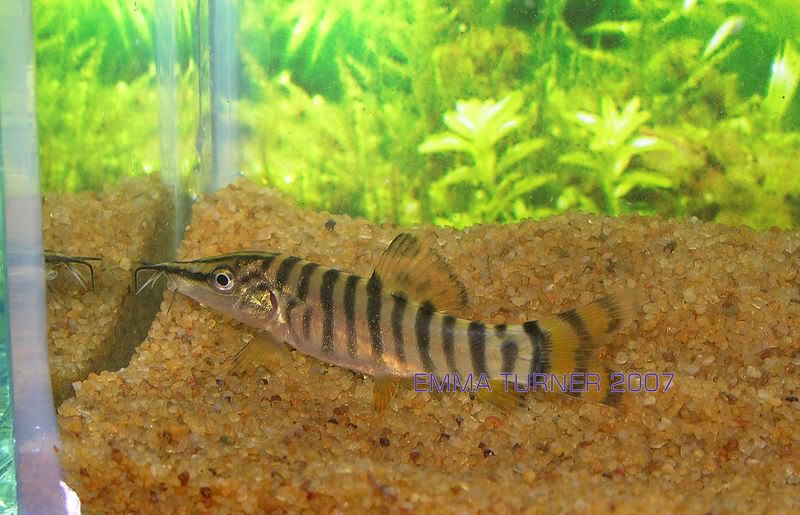
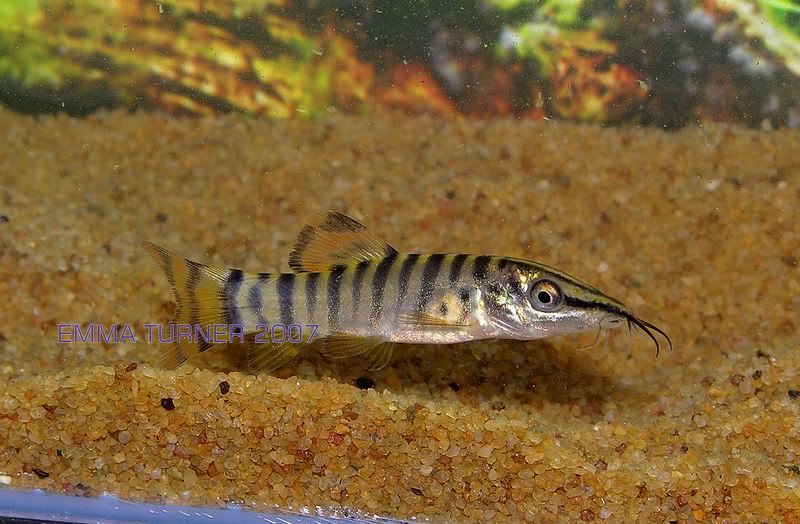
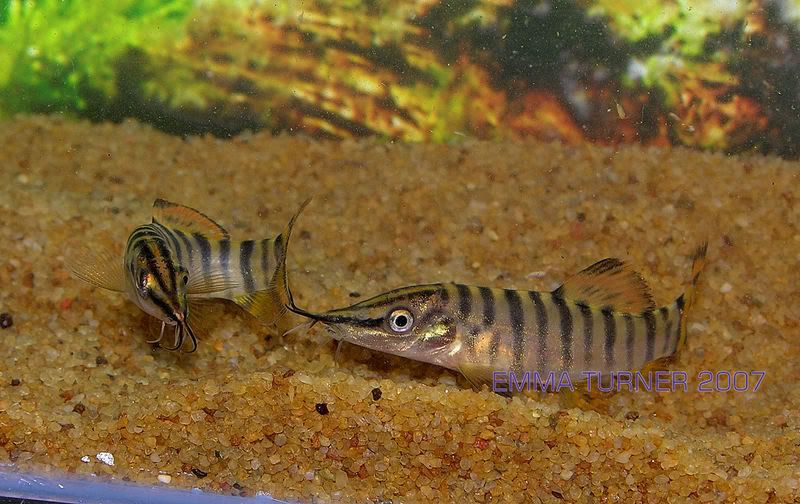
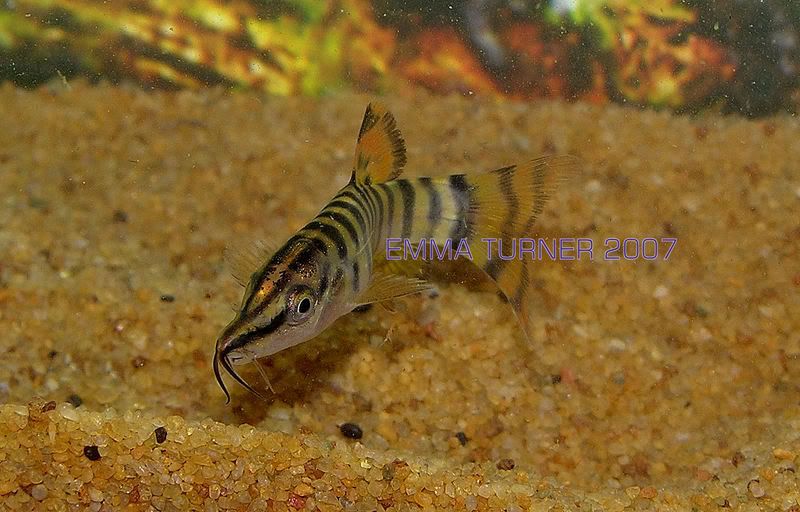
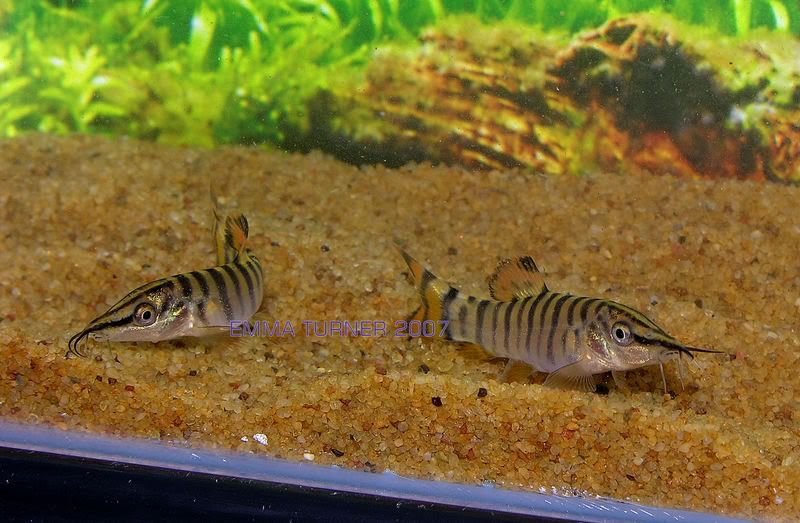
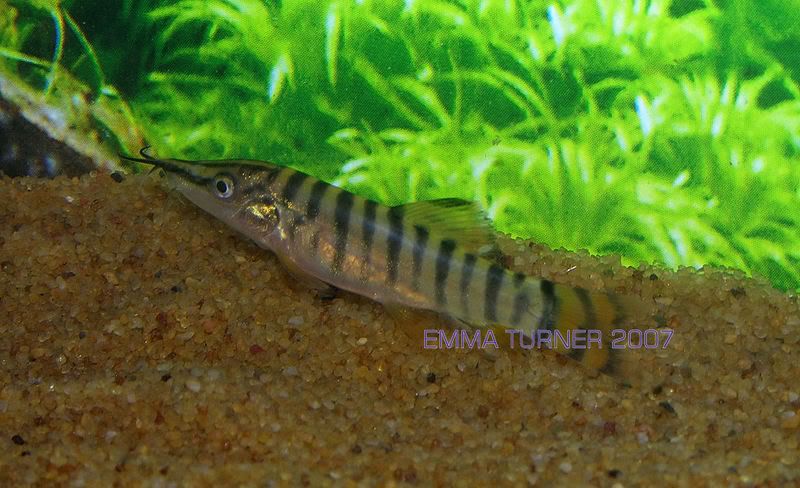
My goodness! What long barbels you have!

Posted: Mon Sep 03, 2007 8:54 pm
by Graeme Robson
Look at the redness on the
dorsal fin

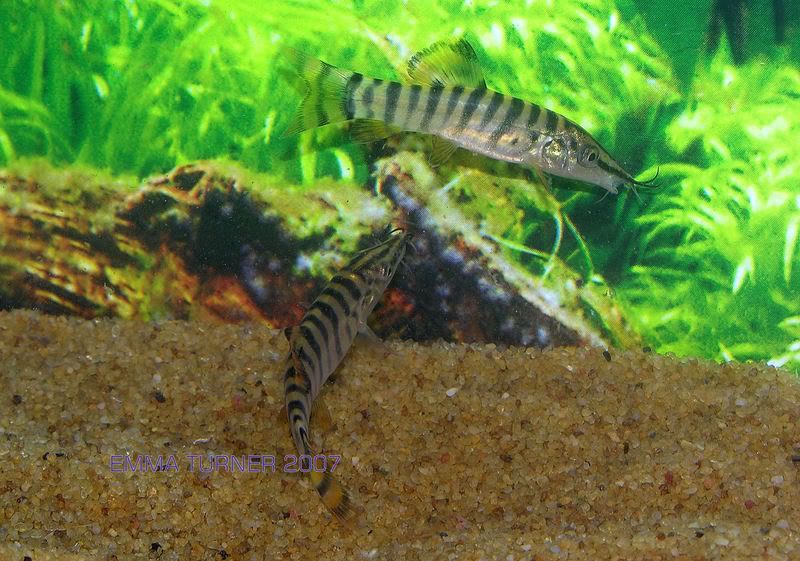
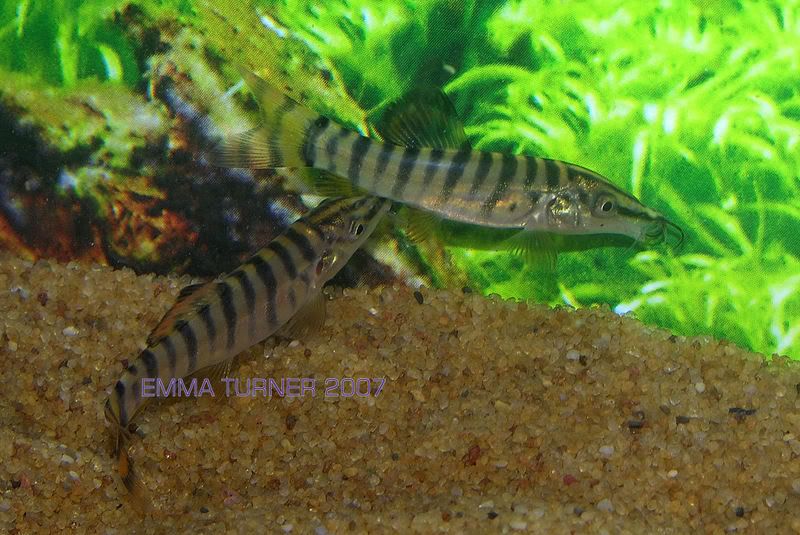
Superb images Emma! These look in great condition.

Posted: Tue Sep 04, 2007 12:10 am
by Martin Thoene
Tiger cubs...cute!
Martin.
Posted: Tue Sep 04, 2007 5:43 am
by piggy4
Stunning pics Emma, as per usual, after seeing your new pics i'm non the wiser ha ha, my Hymenophysa theory was based on the first bars [closest to the head] reaching foward , this is just a whim though , i must say though they are'nt as stroppy as the usual Syncrossus's, though i'll not hold my breath ha ha , the terrible teens are yet to be reached ?
Posted: Tue Sep 04, 2007 6:06 am
by Mad Duff
If these grow into their whiskers like dogs grow into their paws these are going to be a good size

Great pics Emma

Posted: Tue Sep 04, 2007 11:26 am
by Emma Turner
Thanks for the comments guys - much appreciated!

I have asked some questions of my supplier and the following is the main gist of what he has told me. He cannot divulge the actual location in Laos, only that it was previously unexplored:
He himself has not seen the adult fish, not has his chief collector. But....the fishermen who caught this species say they came across large adults at the time of collection, and their appearance, although obviously larger, did not differ much from the juveniles. They retained good pattern and colour.
Some specimens were given to the scientists Dr Tan Heok Hee and Dr Tan Heok Hui at NUS for them to investigate.
The season for this fish is now over, they cannot collect anymore at this time. It would seem that the loaches have migrated elsewhere. The season for this fish is short - only 1-2 months, then they disappear.
Emma
Posted: Tue Sep 04, 2007 11:37 am
by The.Dark.One
They could be young
Syncrossus yunnanensis (and before you say this is a synonym of beauforti I do not agree!!!

)
Posted: Tue Sep 04, 2007 7:28 pm
by The.Dark.One
I have some images of similar sized Irrawaddy berdmorei and they are very similar in pattern (but not the same colours)
Posted: Tue Sep 04, 2007 7:42 pm
by Emma Turner
Are you able to scan and upload them here, One of Darkness?
Emma
Posted: Tue Sep 04, 2007 7:48 pm
by The.Dark.One
Emma Turner wrote:Are you able to scan and upload them here, One of Darkness?
Emma
Hi Emma, unfortunately they are not my images and I only have permission to reproduce them in the article I am doing (which hopefully will be finished this month). They arent the same colour but the pattern is almost identical. You will see them in the article, which I think I will get drunk after finishing because it has been hard work and there are still lots of questions that are unanswered that need someone qualified and working on them full time to resolve. It should at least generate some debate (and I'm sure criticism!!)
!!!
Darkness Prevails
Posted: Tue Sep 04, 2007 8:00 pm
by Emma Turner
Ah, well, never mind.
Do the images show any kind of spotting on the flanks of the Irrawaddy
S. berdmorei?
By the way, we are all looking forward to your article!
Emma
Posted: Wed Sep 05, 2007 6:47 am
by The.Dark.One
Emma Turner wrote:Ah, well, never mind.
Do the images show any kind of spotting on the flanks of the Irrawaddy
S. berdmorei?
By the way, we are all looking forward to your article!
Emma
As the specimens grow they start getting some spots. But some berdmorei forms hardly have any spots in smaller specimens. Based on the pattern and the dorsal fin ray count my opinion is that these are a form of berdmorei and until we get some specific locality data or proof that they are from Laos I think we need to proceed with caution on the issue of locality.
Thanks for the interest in the article. At the moment its about 40 or so pages of A4 text discounting the images!!! Some of it is based on scientific and specific reliable information but unfortunately some of it is hypothesis or educated (or uneducated!) guesses! It will at least provide some interesting information but is by no means the whole picture.
Cheers
Posted: Wed Sep 05, 2007 11:31 am
by Emma Turner
I totally trust this supplier and what he has told me. I know that he has contacts in Laos as he has shown me 'preview photographs' of some other loach species coming from Laos in the next few months (and which I know are endemic to Laos) so I have no reason to doubt the country of origin of these. However, at this stage, they do not wish to release precise location details.
Emma
Posted: Wed Sep 05, 2007 1:49 pm
by piggy4
This thread is really interesting ! and in a way all the intigue that surrounds these fish is spellbinding !
Posted: Thu Sep 06, 2007 12:51 pm
by helen nightingale
Emma now you are taunting us! how long do we have to wait to see these new fish?
Dark One that paper sounds like it will be worth the wait. best wishes for completion, and enjoy the crinking afterwards