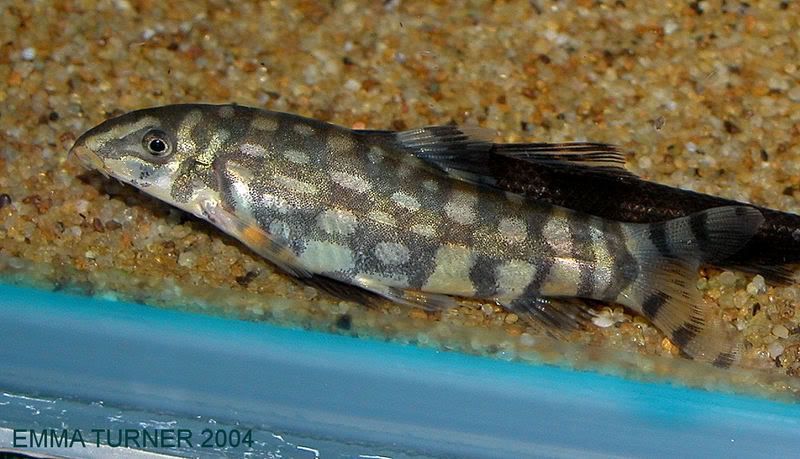
Page 5 of 6
Posted: Tue Sep 18, 2007 10:40 pm
by Emma Turner
Oh, and before I go to bed, I should say don't forget to look at some of the
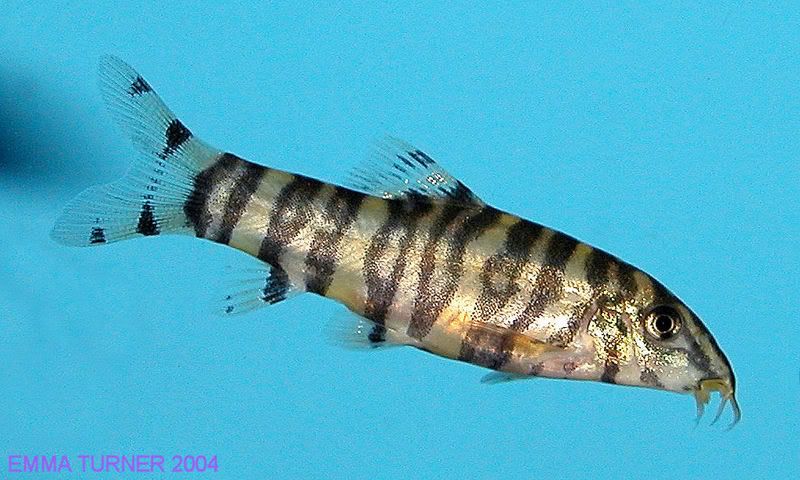
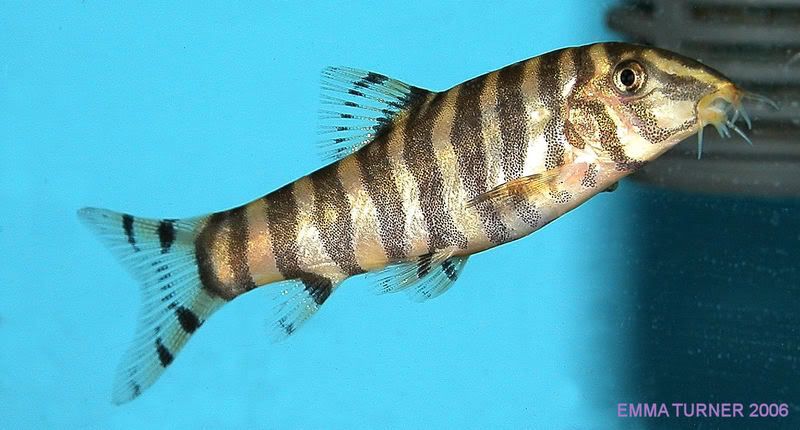
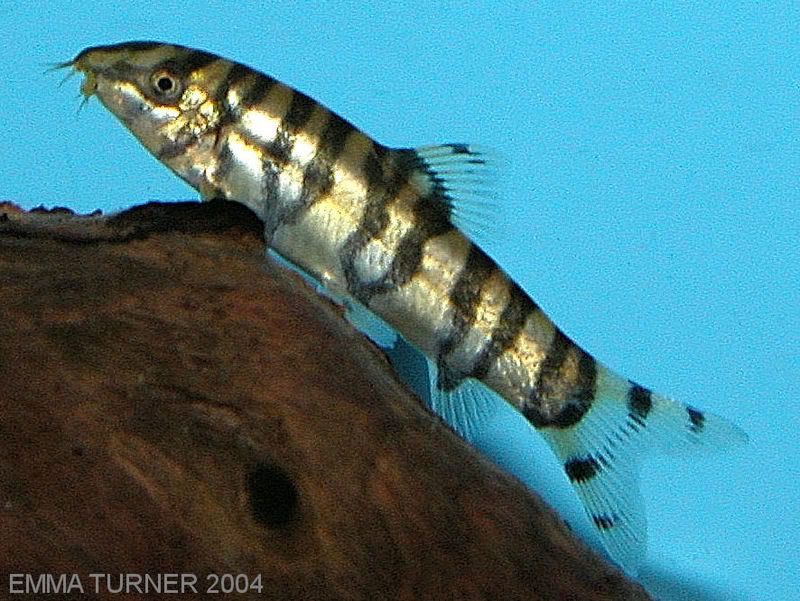
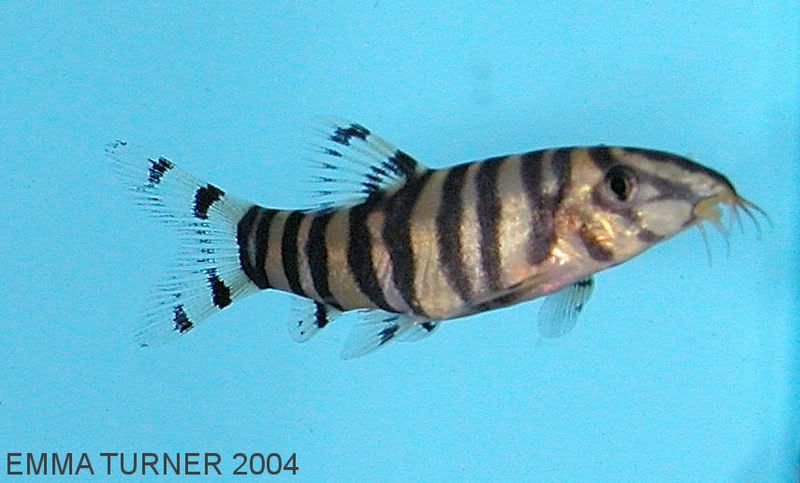
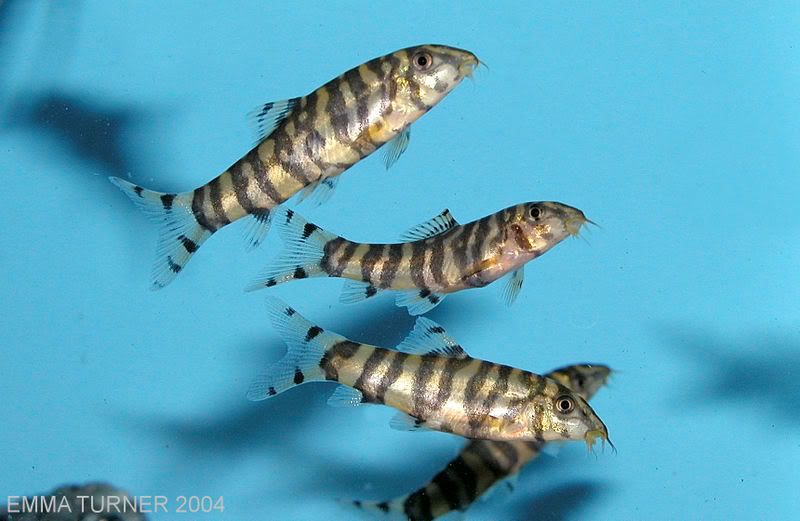
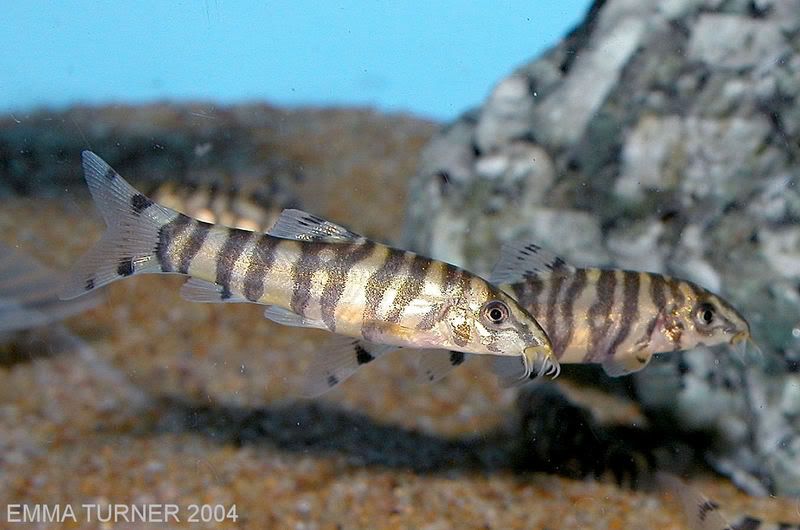
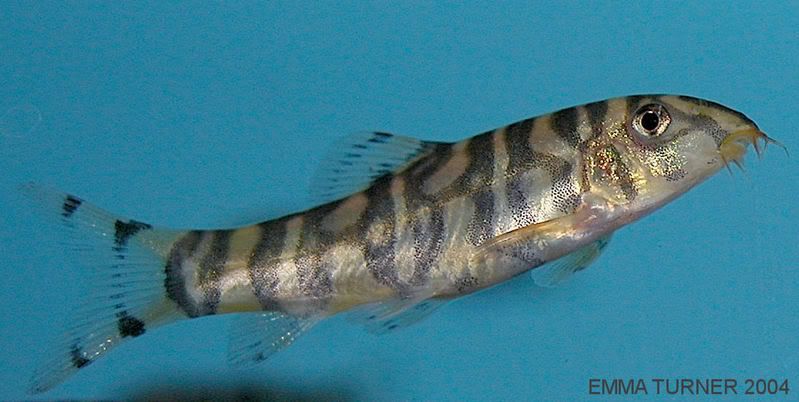
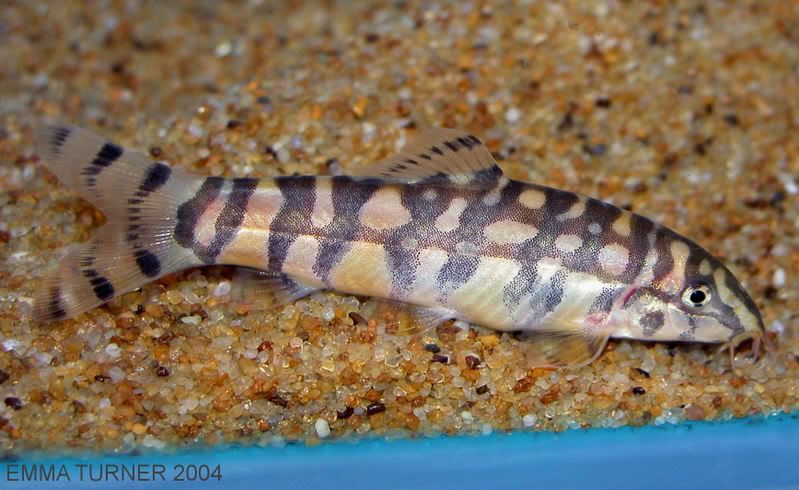
kubotai-ish patterns of some of these chaps (pics 6, 7, 8, 16, 18, 19, and then some of the shots taken in the photo tank):
http://forums.loaches.com/viewtopic.php?t=8699
Emma
Posted: Tue Sep 18, 2007 11:52 pm
by mikev
Thank you, Emma,
Sorry for misquoting Kottelat...
The way to definitely tell yoyo apart from the rest is their insane growth speed. This is a major characteristic, unlike the stripe patterns, good enough to define a species. Kubs have no such burst, can anyone comment on
Rostrata?
Thanks a lot for the links, to be perused.
cybermeez wrote:I'm not sure what caused the demise of the Kubs and some of their tank mates. They just turned up dead rather suddenly.
Interesting. It took me a while to trace this kind of things to tap water (fish turning dead usually 24-36 hours after W/C), but the connection is certain. Were any kuhlis lost? (if yes, it is not the same -- kuhlis seem to be immune)
Neat Striata...well it might be a striata. The photo is kinda blurry (is that a red nose I see?), but the pattern looks a lot more like Rostrata to me. How big is he?
Sorry for the quality, this was taken at the store and it is impossible to focus on a small fish (<1") in the middle of 50. Slightly better, I hope


Yes, slightly red nose (will not be much at this size), and certainly a striata, but connecting lines on both sides. Unfortunately, I just noticed that the other side has a large white dot on the cheek...(top photo) ...looks more like a tumor/bacterial than ich....so we may not be able to find out how it develops. Bad luck..somehow missed this.
Posted: Wed Sep 19, 2007 8:06 am
by Martin Thoene

This is my fish Mike. It has a shorter face and it's about 2.25" SL.
Here it is a bit older.........

I believe that the longer faced fish are a regional variation and I've generally seen it in larger specimens only. I'm assuming that means the source only ship fish of a certain size, or the long face is a naturally occuring shape in larger wild fish that tends not to develop under the artificial conditions in aquaria.
Generally, most aquarium fish are deeper-bodied than wild fish due to regular feeding and less exercise. I'm sure this affects skeletal development which is where the head shape comes from.
Martin.
Posted: Wed Sep 19, 2007 9:19 am
by mikev
Cheers, Martin,
Did not realize it is the same fish...it is still beautiful...
On long-faces: very likely a different supplier. The price tag was unusual ($14.99 instead of the usual $9.99). The four I took also included a smaller one (2.5") with the same markings and head-shape.
I'm still wondering if their behavior difference (going to the top of the tank, going into strong current, and simply swimming around in the upper part of the tank) is connected to the body shape, or they simply did not accumulate the fat the way your fish or my Alpha did.
Posted: Wed Sep 19, 2007 12:05 pm
by Emma Turner
Posted: Wed Sep 19, 2007 12:06 pm
by mikev
Aha. Found. This is how my Kub changed from March to September:


Weird, but no dot changes at all. There is, however, a horizontal fragment near the tail that is new.
Posted: Wed Sep 19, 2007 12:08 pm
by Emma Turner
mikev, I hope you don't mind, after I added in those B. rostrata pics, I edited the title of this thread which might draw more interested parties into this debate.
Emma
Posted: Wed Sep 19, 2007 12:33 pm
by loachmom
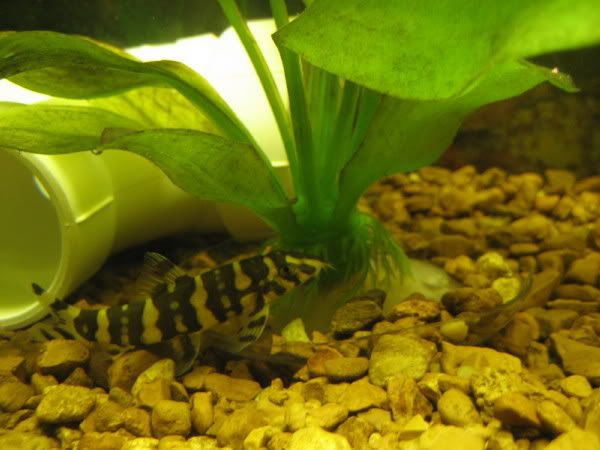
Rubix wrote:loachmom yours appears to be a kubotai to me
Jamie, after seeing Emma's latest photos, I'm inclined to think you are right. I guess time will tell.
Posted: Wed Sep 19, 2007 12:36 pm
by mikev
Emma Turner wrote:mikev, I hope you don't mind, after I added in those B. rostrata pics, I edited the title of this thread which might draw more interested parties into this debate.
Emma
Not at all, Emma, and thank you for nice pictures.
The thing which I'd appreciate most right now would be for someone who keeps "standard"
Rostrata's to comment on their development. Just how do they grow, and ideally some photos of the same fish at different times. I know that TammyLiz keeps some, but she seems to be gone...does anyone else keep
Rostrata here?
Posted: Wed Sep 19, 2007 1:16 pm
by newshound
thanks for changing the title it does indeed bring more ppl into the debate

basing two fish with diff juv. markings which morf. into the same markings when mature is really wrong. Lets face it certain markings work. Loaches would be selected via evolution towards what works in surviving and reproducing. It is REPRODUCTION of the fittest after all.
Posted: Thu Sep 27, 2007 1:56 pm
by loachmom
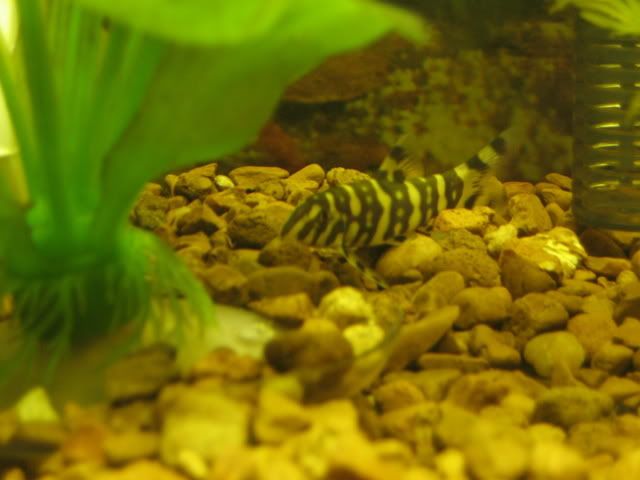
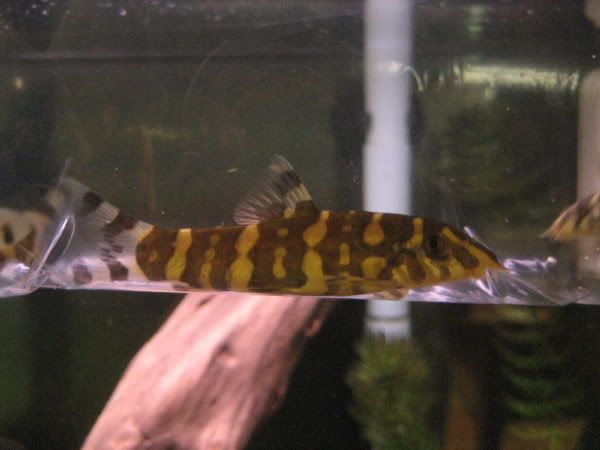
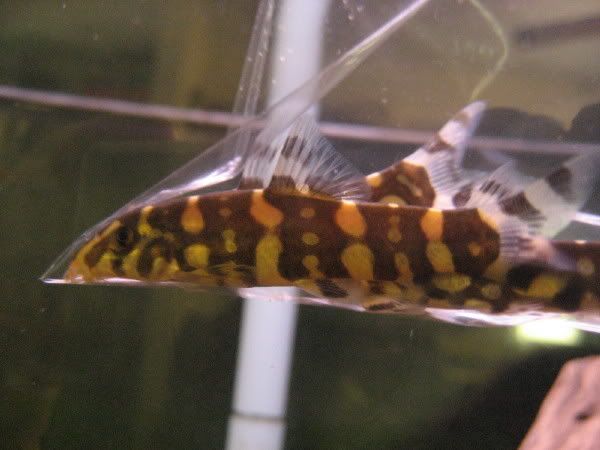
Today, we were moving the
kubotai, and I noticed that the one that was possibly a
rostrata nine days ago has changed in appearance. His white stripes are breaking up.
Here are the old pictures taken 9/18/07
And here are some photos taken today
Posted: Thu Sep 27, 2007 2:54 pm
by Martin Thoene
Very beautiful fish you have there loachmom.
I guess a new thread I started probably has connections with this thread:
http://forums.loaches.com/viewtopic.php?t=9377
Martin.
Posted: Thu Sep 27, 2007 4:16 pm
by loachmom
Thanks Martin.

We are really enjoying the
kubotai. They are very lively; I hope they stay that way.
Posted: Mon Oct 08, 2007 1:32 pm
by mikev
@piggy4:
I'm beginning to think that you may be correct about the connection to sex. One Kub (not mine) has been grown all the way from a Histie-like baby to what seems to be a young Type3 loach, and -- despite good feeding in the tank -- it shows the same downward bend between the dorsal and the caudal as my wildcaught Type3's.
It also seems to me that the bend is an artifact of a larger tail -- and someone previously speculated that larger tail in clowns may be a characteristic of a male.
So it is quite possible that Type2 and Type3 simply represent females and males of exactly the same variation.
Posted: Mon Oct 08, 2007 10:40 pm
by Rocco
Photos of my kubs and yoyos coming soon. They're getting fatter and fatter