Page 7 of 17
Posted: Wed Jan 03, 2007 7:50 pm
by Emma Turner
Posted: Thu Jan 04, 2007 8:18 am
by helen nightingale
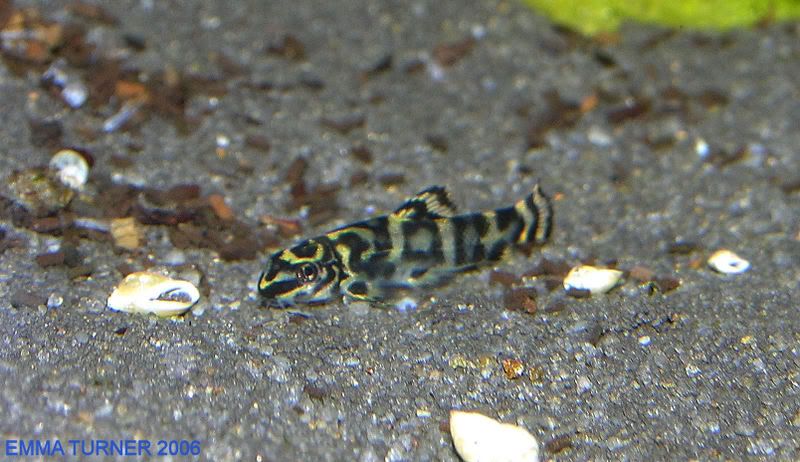
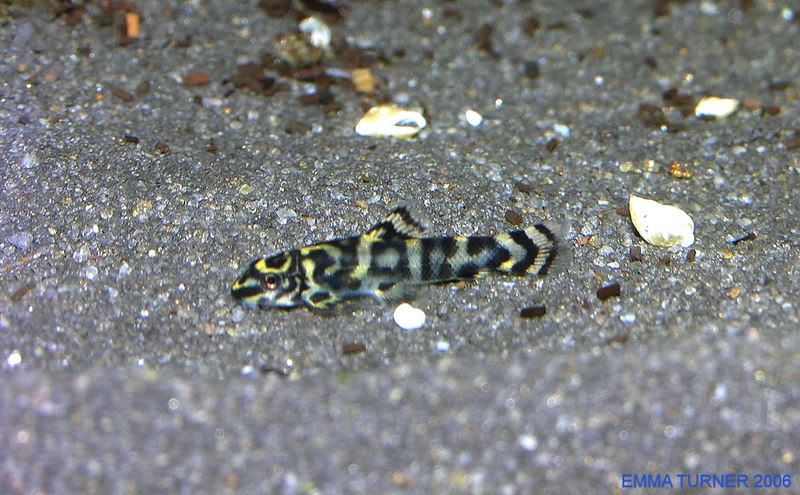
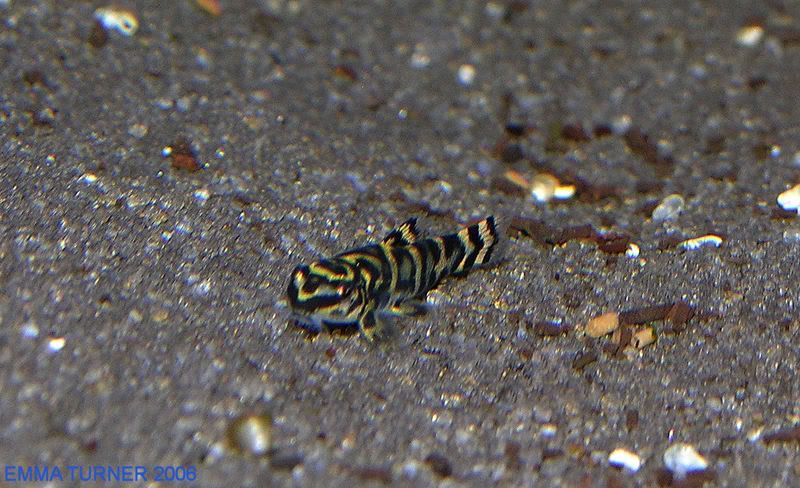
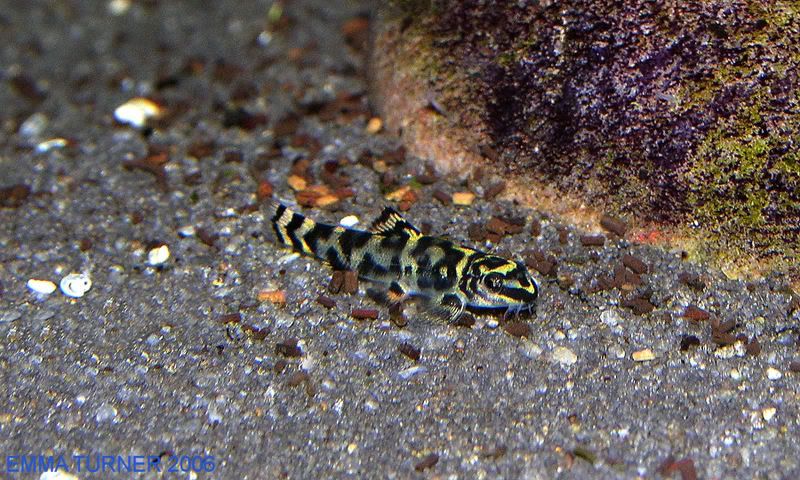
If it is a a spotted sewellia, does that mean that adult spotties go downstream to lay their eggs, or do the babies get washed downstream untill they are bigger and have grown fins big enough to keep them sucking, and then they swim back to faster flowing water?
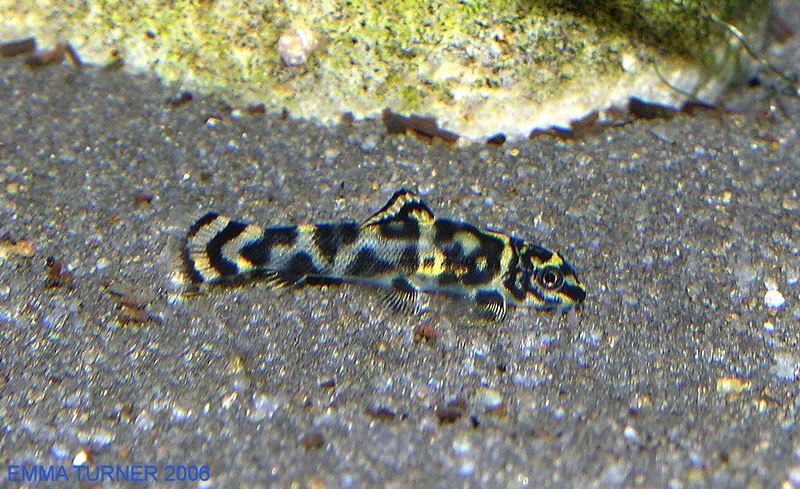
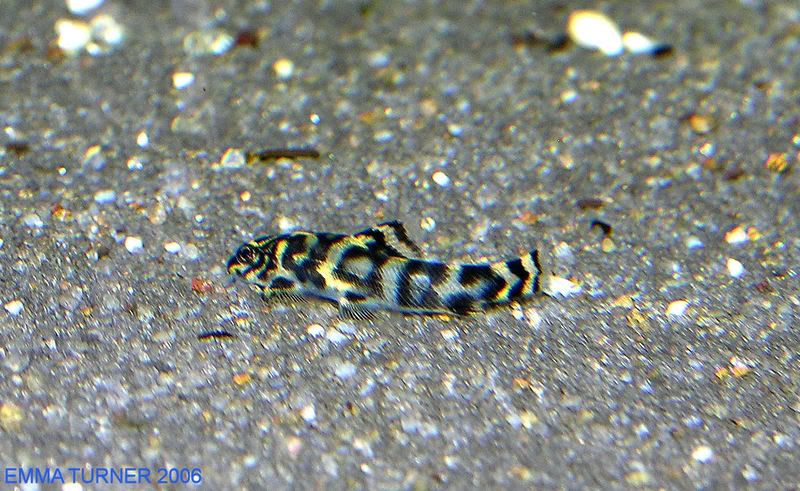
it is a very sweet baby, and you really do take amazing pictures
Posted: Thu Jan 04, 2007 8:29 am
by Graeme Robson
Yes, Helen. The eggs are released down the river until they settle under pebbles...etc. Then it's survival of the fittest. Good point with them needing to develop, before moving on.
Superb pictures Emma.
Posted: Thu Jan 04, 2007 8:39 am
by helen nightingale
thanks Graeme. does that mean that spotty eggs are more floaty than lineolata eggs, or do the lineolata have heavy or sticky eggs?
Posted: Thu Jan 04, 2007 11:46 am
by mikev
Interesting ideas.
Do you have any information on the habitats of lineoplata vs spotted? Perhaps there is some difference there?
Posted: Thu Jan 04, 2007 11:52 am
by helen nightingale
is the new borneo suckers book good on stuff like that?
i cant remember what ive got im my folder of fish papers and have yet to have time to study.
would something that eats one species have any cause to not eat the other species?
Posted: Thu Jan 04, 2007 1:08 pm
by Graeme Robson
No information at hand. I've lost a load of pdf papers with my computer
Blowing up.

You can see here, how the eggs would be released down the river. Even if they find a area to dig?, water movement would intervene. Unless they mirgrate....
http://www.loaches.com/articles/sewelli ... -aquariums
Emma, I'll have to bug you for some pdf papers. I'll e-mail you soon....
Pretty please 
Posted: Thu Jan 04, 2007 6:35 pm
by Emma Turner
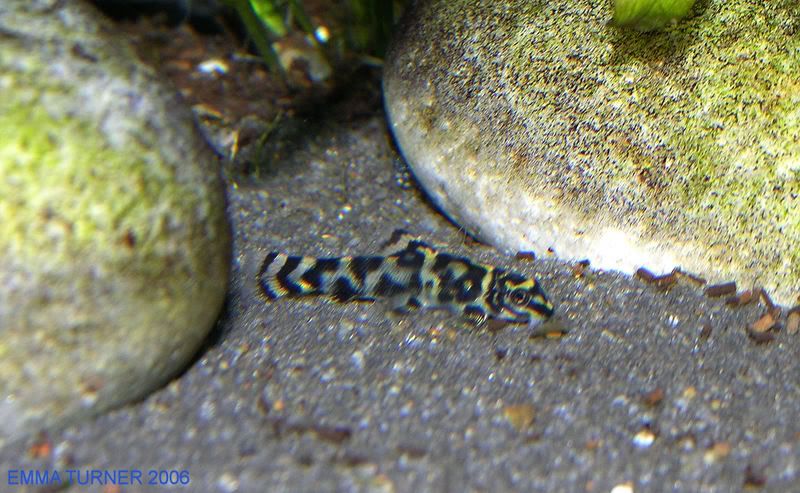
I've got 2 things to report today!
First off, I have seen the baby appearing to
try and sort of cling to a cobble a couple of times today. Here's a pic:
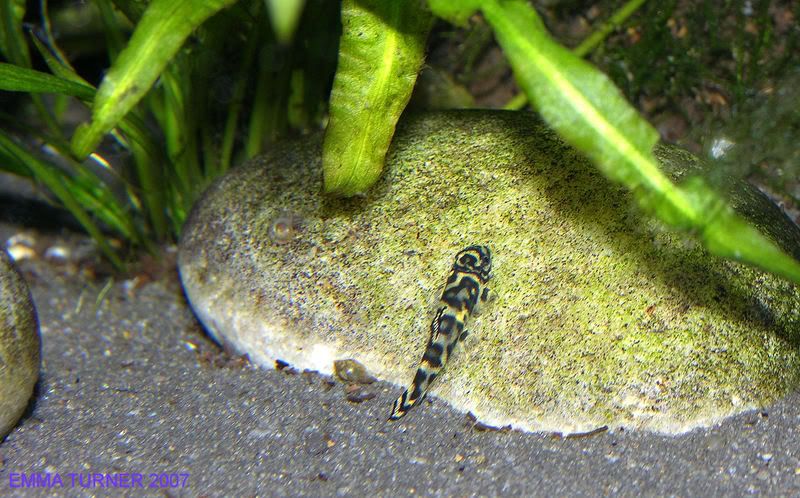
It didn't stay in this position for very long time, just sort of sliding back down to the sand.
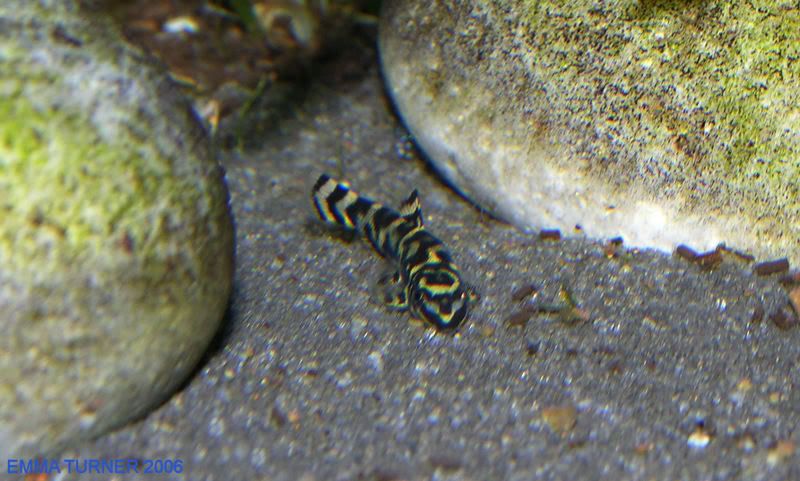
And the 2nd thing I have to report is
more baby news! Earlier in this evening, I was sitting in front of the tank drying my hair (!) when I noticed a tiny movement from over the back of the right hand side of the tank (the opposite side to where the first mystery fry hangs about). It was another one of the same, except so much smaller - 5mm TL absolute tops. So it is clearly from another spawning,
, and is absolutely
weeny. Here is a pretty naff pic, but you can see the solid stripes and tiny size:
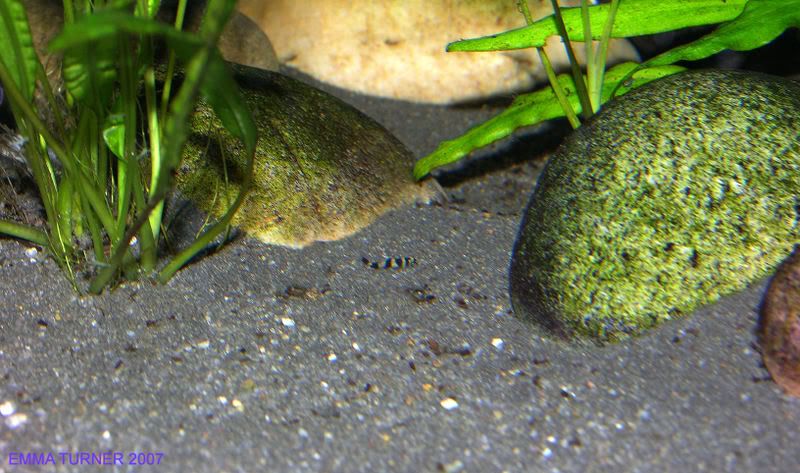
I'm a bit concerned about this one as it is a lot smaller than the other one was when I first spotted it, and it is already foraging about out in the open. This side of the tank is also where the two
Schistura lounge about too, so I hope it manages to stay out of their way.
Anyway, I'm really chuffed at this second spawning. Will have to check the filter again soon, just in case!

Emma
Posted: Fri Jan 05, 2007 10:35 am
by mamaschild
Posted: Fri Jan 05, 2007 10:46 am
by Martin Thoene
And here's me frustrated because the apparent spawning I saw a couple of weeks ago seems to have come to nought

The day before yesterday I repeated the trigger procedure. 5-% water-change, fresh almond leaves in the filter. The water went clody with tannins, the fish went nuts again
So we'll see.
If I see some more
S. lineolata I'm going to get another male. I think this guy is lazy because he has no competition.
I'm pleased for you Emma. I'll keep my fingers crossed for its survival.
Martin.
Posted: Fri Jan 05, 2007 10:55 am
by Emma Turner
Thank you's!
I have seen the little one again today, so hopefully it knows how to stay safe.
Martin, it looks like we'll both have crossed fingers, as mine are crossed for you and
your Sewellia.
I think adding to the group with another male is a good idea. I have been wondering if the the fact that mine are spawning so regularly now is because of the size group I keep, with several of both sexes in this group.
Emma
Posted: Fri Jan 05, 2007 11:28 am
by Jim Powers
WOW!! Emma!! That is great!! Checking that filter now might be a good idea.
Martin, I think adding the extra male is a great idea. I have Sewellia in two tanks. One tank has a male and female and the other two males and a female. There is definately more jousting and the like in the tank with two males. In the other tank, there is very little interaction between the male and female Sewellia. I still think you will be finding some tiny Sewellia when you least expect it. Fingers are crossed.
Posted: Fri Jan 05, 2007 11:33 am
by Mad Duff
Great news Emma
Not wanting to hijack your thread but on reading the most recent posts do you think it may be better for me to consider 2 males and 4 females or 3 males and 3 females of one species rather than 2 trios of 2 seperate species for my small river tank

Posted: Fri Jan 05, 2007 11:58 am
by Emma Turner
I think bigger groups are best, especially after seeing the natural habitat pics of them all congregated in quite a large pack. I'd be inlcined to suggest 2 or 3 males and 3 females.
Emma
Posted: Fri Jan 05, 2007 12:04 pm
by Mad Duff
Thanks Emma, now its decision time then
I am still planning on hopefully popping down to see you in March to get my Hillies so it will either be 6
Sewellia Lineolata or 6
P. Cheni, ooh the decisions